Keyword Research for SEO: Simple Beginner’s Guide [2025]

   “Your Content Flops Because You’re Targeting Ghost Keywords – Here’s the 2025 Fix That Works (When Nothing Else Does)”

1. Why Keywords Research Matter for   Your Website

 
 What Are  Keywords? (Simple Definition)

       Keywords are the words and phrases people type into Google when searching for something.

  • Example: If someone searches “best running shoes for flat feet”, that’s a keyword.

  • Your goal? Create content that matches what people are searching for.

    Why Are Keywords Important?

  1. Free Traffic from Google

    • If your page ranks for the right keywords, you get free, targeted visitors without ads.

    • Example: A blog post ranking for “how to fix a leaky faucet” can bring hundreds of visitors monthly.

  2. Better Than Guesswork

    • Without keywords, you’re creating content hoping it’ll rank.

    • With keyword research, you know what people are searching for.

  3. Helps Everyone (Bloggers, Businesses, Freelancers)

    • Bloggers: Get more readers.

    • Small Businesses: Attract local customers (“plumber near me”).

    • E-commerce Stores: Rank for product-related searches (“best wireless headphones 2025”).

   Who Needs Keyword Research?

     ✔ New Bloggers – Find topics people actually want to read.

    ✔ Small Businesses – Get found by local customers.

    ✔ Online Sellers – Rank for product searches.

   ✔ Freelancers – Optimize service pages (e.g., “hire a website designer”).

    Real-Life Example

       Imagine you sell organic skincare.

  • Bad Approach: Write a post called “Why I Love Organic Skincare” (too vague).

  • Smart Approach: Target “best organic moisturizer for dry skin” (what people actually search).

      🔹 Key Takeaway: Keywords help you stop guessing and start getting real traffic.

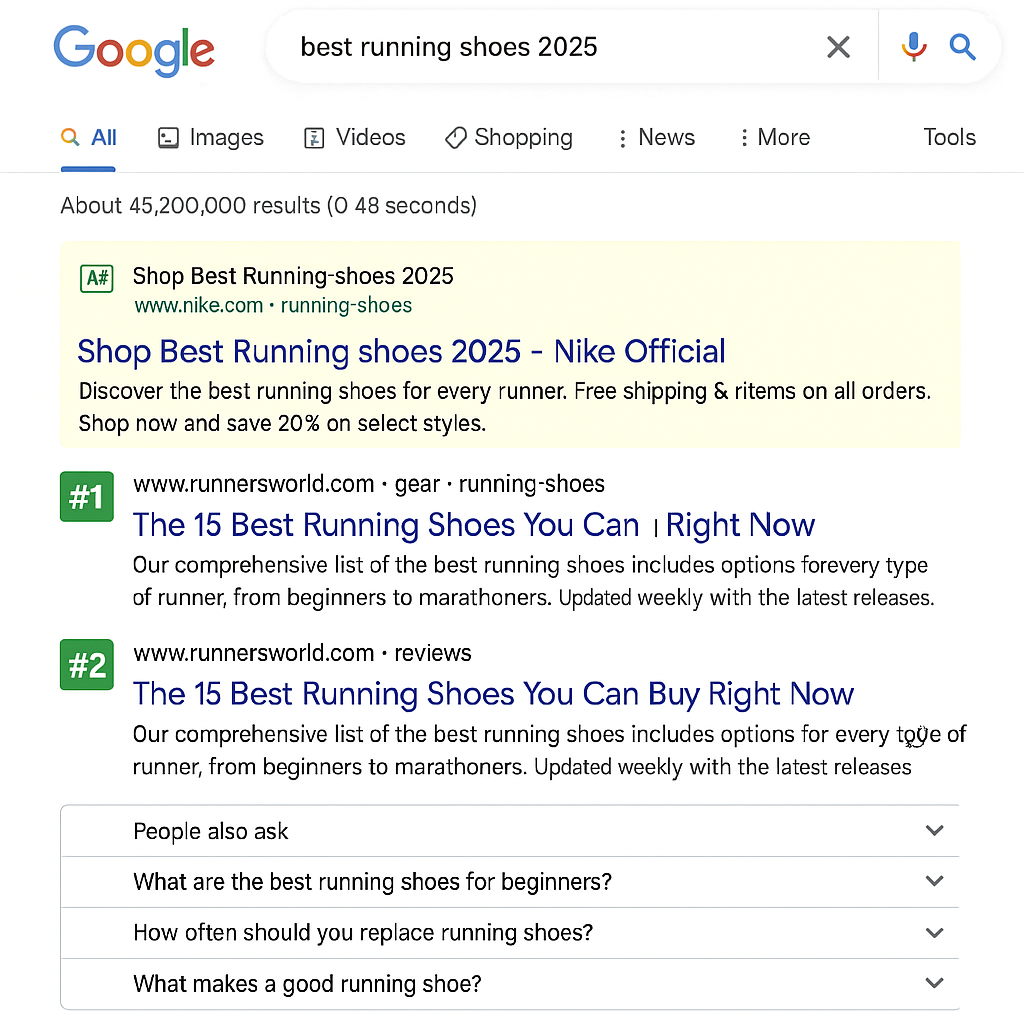
show how keyword matter to rank

2. How Google Chooses What to Rank (Search Intent Explained)


  What is Search Intent?

      Search intent is why someone types a query into Google. It’s not just about the words they use—it’s about what they really want.

   🔹 Example:

  • If you search “how to tie a tie”, you want a tutorial (not a history of neckties).

  • If you search “buy blue silk tie”, you’re ready to purchase.

       Google’s #1 goal is to match searches with the best possible answer. If your content doesn’t match intent, it won’t rank—no matter how many                       keywords you stuff in.


     The 4 Types of Search Intent (With Examples)

     1. Informational Intent

        Goal: Find answers or learn something.

  • Examples:

    • “How to grow tomatoes in pots”

    • “What causes headaches?”

    • “2025 Instagram algorithm update”

  • Content to create: Blog posts, guides, FAQs.


       2. Navigational Intent

       Goal: Reach a specific website/brand.

  • Examples:

    • “Facebook login”

    • “YouTube studio dashboard”

  • Content to create: Optimize for brand names (if it’s yours).


    3. Commercial Intent

       Goal: Research before buying.

  • Examples:

    • “Best DSLR cameras for beginners”

    • “iPhone 15 vs Samsung S23 reviews”

  • Content to create: Comparison posts, product roundups.


     4. Transactional Intent


        Goal:
 Ready to buy or sign up.

  • Examples:

    • “Buy Nike Air Max online”

    • “Cheap WordPress hosting deals”

  • Content to create: Product pages, landing pages.


   How to Find Search Intent (3 Simple Steps)

  1. Type your keyword into Google → Look at the top 5 results.

    • Are they blog posts? Product pages? Videos?

  2. Check the “People Also Ask” box → Reveals related questions.

  3. Use AnswerThePublic.com → Shows real search queries.

    🔹 Example:

  • Keyword: “best protein powder”

  • Top results: “10 Best Protein Powders of 2025” (lists) + “How to Choose Protein Powder” (guide)

  • Intent: Commercial (people comparing options).


   Why This Matters in 2025

      Google now uses AI (like Gemini) to understand intent better than ever. If your content doesn’t match, you’ll lose to competitors—even if your SEO is          perfect.

       Pro Tip:

  • For informational intent → Use “how to,” “guide,” “tips.”

  • For transactional intent → Use “buy,” “deal,” “discount.”


     Key Takeaway

   
        Search intent > keywords.
 Always ask:

  1. “Why is someone searching this?”

  2. “What content does Google reward for this query?”

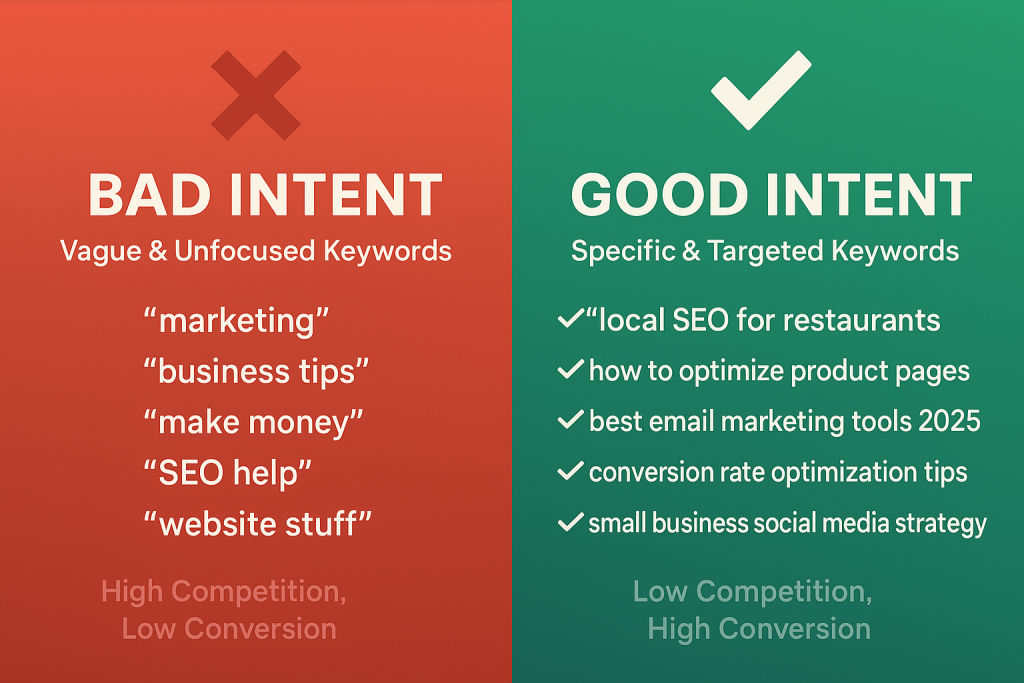
choose keyword according to search intent

3. Step-by-Step Keyword Research for SEO (Free Tools + Easy Tricks)


    Step 1: Brainstorm Seed Keywords


         Start with basic words/phrases related to your topic.

  • 🔹 Example: If you have a fitness blog, think:

    • “weight loss”

    • “home workouts”

    • “healthy diet plans”

         Tip: Ask yourself:

  • What would my audience search?

  • What problems do they have?


    Step 2: Use Free Tools to Find More Keywords

     
       Google Keyword Planner (Free)


  1. Go to ads.google.com → “Keyword Planner”

  2. Enter your seed keywords → Click “Get Results”

  3. Look for:

    • High volume (1,000+ searches/month)

    • Low competition (for beginners)

       Example:

  • Seed: “home workouts” → Finds:

    • “home workouts for beginners” (5K searches/month)

    • “no-equipment home workouts” (3K searches/month)

      Ubersuggest (Free Version)


  •   Shows keyword difficulty (KD) and trends.

  • 🔹 Example: “keto diet plan” → KD 45 (hard) vs. “easy keto meals” → KD 25 (easier).


     Step 3: Spy on Competitors


  1. Find top-ranking pages for your topic (Google your seed keyword).

  2. Use Ubersuggest or Ahrefs Free Backlink Checker → Enter competitor’s URL → See their keywords.

       Example:

  • Competitor’s post: “10 Best Running Shoes for Flat Feet”

  • Their hidden keywords:

    • “running shoes for overpronation”

    • “best cushioned running shoes”


                 Steal these ethically!
 Create better content.


    Step 4: Target Long-Tail Keywords


           These are 3-5 word phrases with less competition.

  • 🔹 Examples:

    • “Best running shoes for flat feet women” (easier than “running shoes”)

    • “How to lose belly fat in 2 weeks naturally”

         Why they work:

  • More specific = higher intent (better traffic).

  • Easier to rank (big sites ignore them).


      Step 5: Filter Your Keyword List


         Keep keywords that pass this 3-part test:

  1. Volume: 500+ searches/month (use Keyword Planner).

  2. Difficulty: KD under 40 (for beginners).

  3. Intent: Matches your content goal (info, product, etc.).

       ❌ Avoid:

  • Keywords with no searches (even if they sound good).

  • Too broad terms (“health” → 1M searches, impossible to rank).


       Real-Life Example
 

       Niche: Gardening Blog

  • Seed: “indoor plants” → Finds:

    • “low-light indoor plants for beginners” (2K searches, KD 30)

    • “how to water snake plants” (1.5K searches, KD 25)

  • Action: Writes a post targeting the easier long-tail keyword first.


    Key Takeaway


        Start with seed keywords → Use free tools → Spy on competitors → Target long-tail phrases → Filter for high-value keywords.

          Tools to Bookmark:

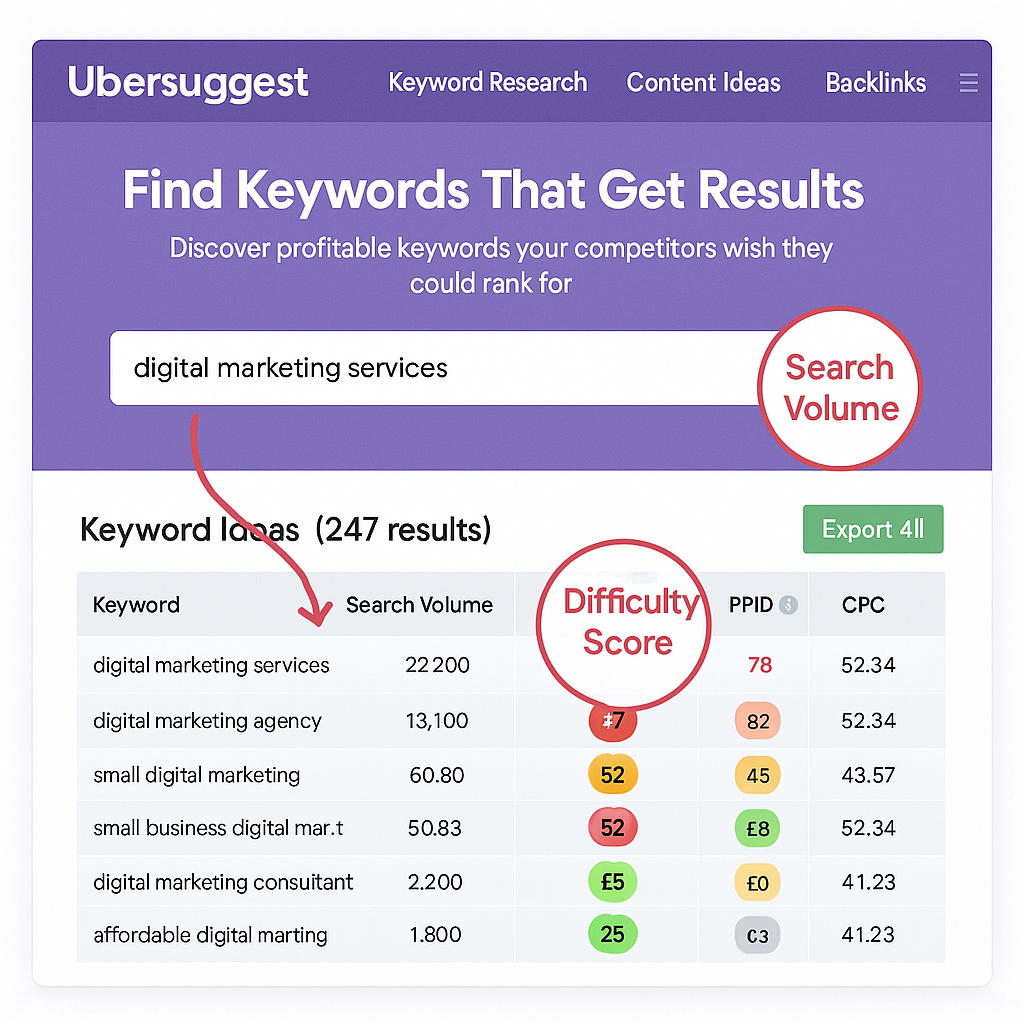
chatgpt image aug 1, 2025, 10 13 27 am

4. How to Pick the Best Keywords for SEO (Avoid Wasting Time)


              Picking keywords isn’t just about search volume—it’s about finding the right ones you can actually rank for. Here’s how to choose wisely:


     Step 1: Check Search Volume (But Don’t Obsess Over It)
   

  •  What it means: How many people search for this keyword per month.

  • Good range for beginners: 500–5,000 searches/month (enough traffic, but not too competitive).

  • Where to check: Google Keyword Planner, Ubersuggest.

      🔹 Example:

  • “Best protein powder” → 50K searches (too hard for new sites).

  • “Best vegan protein powder for weight loss” → 3K searches (better).

        ⚠️ Warning: Some keywords have low volume but high conversions (e.g., “buy organic protein powder online”). Don’t ignore them!


     Step 2: Look at Keyword Difficulty (KD)


  • What it means: How hard it is to rank in the top 10 for that keyword.

  • Scale: 0 (easiest) to 100 (hardest).

  • Beginner-friendly: KD under 40 (green zone in Ubersuggest/Ahrefs).

     🔹 Example:

  • “How to lose weight fast” → KD 85 (nearly impossible).

  • “How to lose 10 pounds in a month without gym” → KD 35 (doable).


            Pro Tip:
 If KD is high but volume is low, check the competition manually (Google the keyword—are the top results from big sites like Forbes or small                blogs?).


      Step 3: Match Keyword Intent to Your Goal


         Ask: “What does the searcher want?”


  Intent TypeYour Content Should BeExample
       InformationalBlog post, guide“How to fix a leaky faucet”
       CommercialProduct comparison, reviews“Best budget smartphones 2025”
       TransactionalProduct page, offer“Buy iPhone 15 Pro Max discount”

         ❌ Big Mistake: Targeting “best laptops” (commercial) when you sell laptops (should target “buy gaming laptop under $1000”).


       Step 4: The 3-Question “Keyword Viability Test”
   

          Before finalizing a keyword, ask:

  1. “Can I rank for this?” (KD < 40, competition isn’t too strong).

  2. “Does it bring the right traffic?” (Matches your business goal).

  3. “Is there business value?” (Will it lead to sales, sign-ups, or ad revenue?).

    🔹 Example:

  • Keyword: “How to meditate for anxiety”

    • KD 30 (doable)

    •  2K searches/month (good traffic)

    •  Fits a wellness blog’s audience (right intent)


      Red Flags: Avoid These Keywords

         🚩 Zero searches (even if it sounds perfect).

        🚩 Misaligned intent (e.g., targeting “best cameras” when you sell photography courses).

        🚩 Too broad (“health tips” → 1M searches, impossible to rank).

        🚩 “Toxic” keywords (spammy, or irrelevant to your niche).


     Real-Life Example

         Scenario: You run a small coffee blog.

  • ❌ Bad pick: “Coffee” (Too broad, KD 100).

  • Smart pick: “How to make cold brew coffee at home” (KD 25, 4K searches, matches audience intent).


  Key Takeaway


          Volume + Low KD + Right Intent = Winning Keyword.

           Test every keyword before creating content.

           Long-tail > Short-tail (easier to rank, better conversions).

       Tools to Use:

  • Ubersuggest (Free KD checker)

  • Google Keyword Planner (Free search volume)

  • Ahrefs Free Backlink Checker (See competitor keywords)

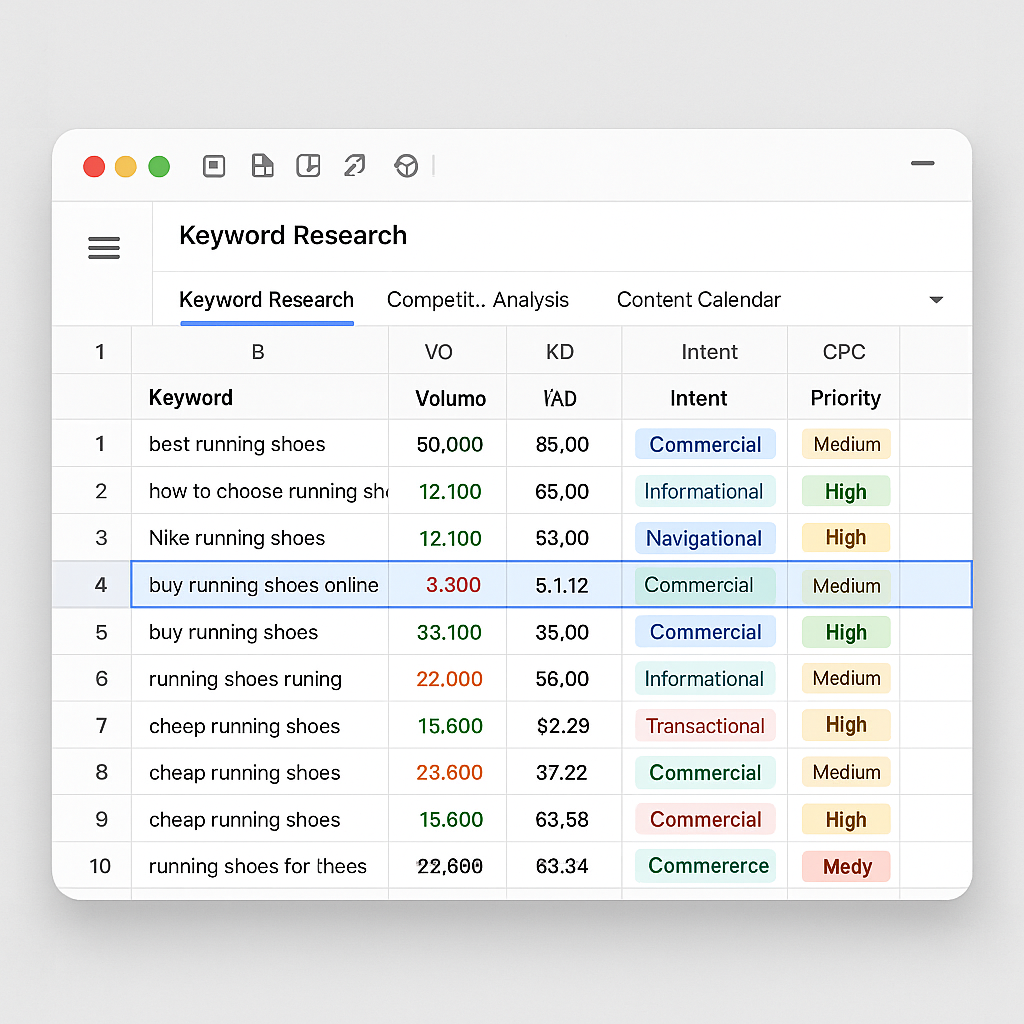
chatgpt image aug 1, 2025, 10 24 10 am

5. How to Use Keywords Like a Pro


     Where to Place Keywords for Maximum SEO Impact

         Now that you’ve found perfect keywords, here’s exactly where to put them in your content:


   1. Title Tag (Most Important!)

  • Include your main keyword near the beginning

  • Keep under 60 characters

  • Good: “Best Running Shoes for Flat Feet (2025 Buyer’s Guide)”

  • ❌ Bad: “Shoes That Might Work for You”

   2. Headings (H1, H2, H3)

  • Use keywords in at least one H2

  • Break up content naturally

  • ✅ Good:

    text 
    H1: Best Protein Powders for Weight Loss
    H2: Whey vs Plant-Based Protein
    H2: How to Choose the Right Protein Powder
     

  3. First 100 Words

  • Google pays extra attention to the opening

  • Naturally include your main keyword

  • Example: “If you’re searching for the best protein powder for weight loss, you’ll want to consider…”

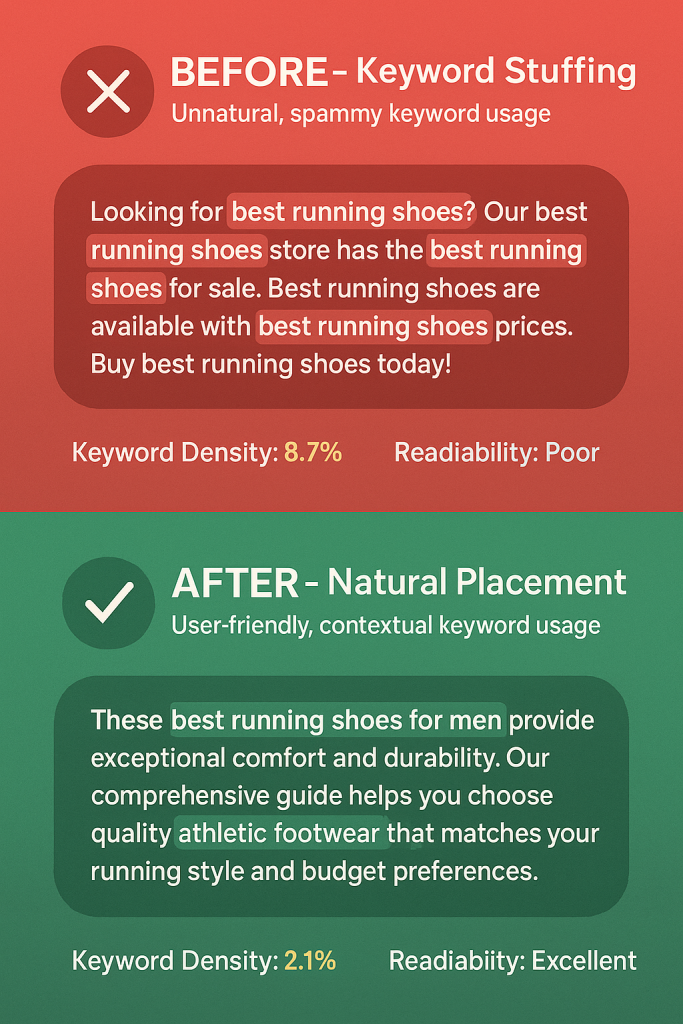
   4. Throughout Content

  • Use variations (LSI keywords) naturally

  • Aim for 1-2% keyword density (about 1-2 mentions per 100 words)

  • Natural: “These running shoes provide excellent arch support for flat feet while remaining lightweight.”

  • ❌ Stuffing: “Best shoes for flat feet. Flat feet shoes. Shoes flat feet people need.”

   5. URL Slug

  • Keep it short and keyword-rich

  •  Good: yoursite.com/best-running-shoes-flat-feet

  • ❌ Bad: yoursite.com/post1234

    6. Meta Description 

  • Include keyword once naturally

  • Write to increase click-through rate

  • Example:
                   “Discover the 7 best running shoes for flat feet in 2025. Our podiatrist-approved picks provide support and comfort for…”

     7. Avoid These Common  Keyword Mistakes

  1. Keyword Stuffing

    • Sounds robotic and gets penalized

    • ❌ “Best NYC pizza best pizza in New York best New York pizza place”

  2. Ignoring User Experience

    • Write for humans first, Google second

    • If it sounds awkward, rewrite it

  3. Forgetting Mobile Searches

    • Optimize for voice search (more conversational)

    • Example: Target “where can I buy organic coffee near me”

 How to Track Your Keyword   Rankings


   Free Tools:
 

  1. Google Search Console

    • Shows your actual rankings

    • Tracks clicks from search

  2. Ubersuggest

    • Monitor position changes

    • Track competitors

   What to Look For:

  •  Keywords moving up/down in rankings

  •  New keywords you’re ranking for

  •  Pages losing traffic (may need updating)

 
 When to Update Your     Keywords

  1. Traffic Drops – Check if rankings slipped

  2. New Trends – Update for current year (2025)

  3. Algorithm Updates – Google makes changes regularly

  Key Takeaways


      Place keywords in title,  headings, first paragraph, URL

           Write naturally – 1-2% density is enough

            Track rankings with free tools

            Update content when traffic drops
chatgpt image aug 1, 2025, 10 24 31 am
Scroll to Top